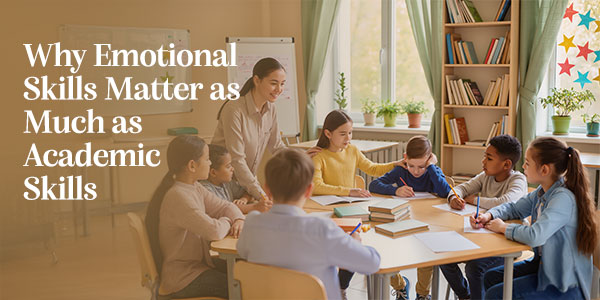
When we think about preparing children for the future, academics often take center stage. We encourage them to read earlier, solve math problems faster, and perform well on every test. Yet, there is another essential skillset that shapes success far more quietly, emotional regulation.
Emotional skills help children understand what they feel, why they feel it, and how to express those emotions in healthy ways. These skills influence friendships, learning, self-esteem, and the ability to overcome challenges. And just like reading or writing, emotional skills can and should be taught.
Help children navigate the storm of emotions
Children experience big emotions every day. Excitement, disappointment, frustration, worry: these feelings show up at home, at school, and in every new situation. Without guidance, emotions can feel confusing and overwhelming. Kids may react impulsively because they don’t have the tools to slow down, think, and make choices that support positive outcomes.
This is where Cognitive Behavioral Therapy (CBT) comes in. CBT teaches children that thoughts, feelings, and behaviors are connected. When a child learns to change how they think about a situation, they can change how they respond to it. For example, shifting “I’m terrible at this!” to “I’m still learning, and that’s okay” can turn frustration into determination.
Emotional skills nurture resilience.
A child with resilience can handle setbacks, recover from disappointment, and keep trying even when something feels hard. This mindset creates confidence not rooted in perfection but in personal growth.
Teaching emotional skills also improves behavior, not through punishment or removal, but through understanding. When kids feel heard and seen, they are better equipped to communicate instead of act out. This supports stronger teacher-student relationships and a more peaceful home environment.
Socially, children who learn emotional regulation are better prepared to build healthy friendships. They learn empathy, sharing space, and respect for others’ feelings. They also become problem-solvers who can navigate conflicts thoughtfully rather than with anger or avoidance.
Identify Anxiety, Stress, or Sadness.
Importantly, emotional skills support mental health. When children learn to identify anxiety, stress, or sadness early, they develop coping strategies that prevent those feelings from becoming overwhelming. They learn that emotions are normal, not something to fear or hide.
Parents, caregivers, and teachers play a powerful role in this process. Emotional coaching doesn’t require complex tools. It looks like asking simple questions:
- “How did that make you feel?”
- “What could help you calm down right now?”
- “What could we try next time?”
Books like A CBT Toolkit for Kids make teaching these skills easier and more enjoyable. Through fun exercises, kids discover that their minds are powerful and capable of positive change.
As the world becomes increasingly fast-paced and stressful, emotional wellness is no longer optional, it is foundational. Academic achievements help children reach opportunities. Emotional skills help them succeed within those opportunities.
By investing in both, we empower children to become confident learners, compassionate friends, and resilient individuals. Emotional education doesn’t replace academic learning, it strengthens it. And best of all, the benefits last a lifetime.